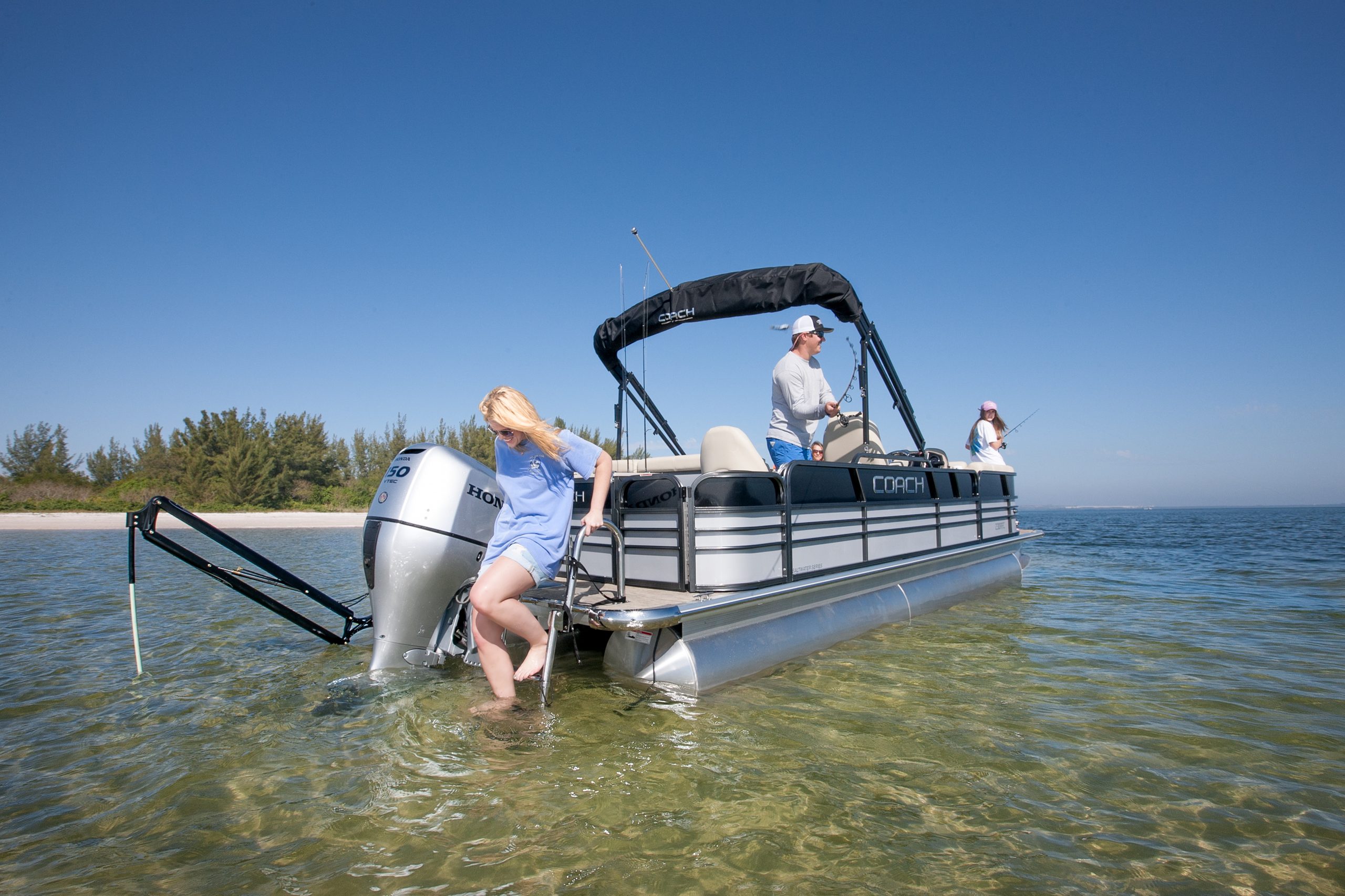
Comfort, leisure, and spending time on the water with loved ones are the main purposes of pontoon boats. They are well-liked for swimming, fishing, and leisure activities because of their roomy decks and sturdy construction. However, when a pontoon boat’s movement is affected by wind, currents, or shifting water conditions, maintaining its safe position may become difficult. Pontoons have unique structural features that affect how they react to outside pressures, in contrast to conventional boats. Maintaining control, safeguarding the vessel, and having a more pleasurable sailing experience all depend on selecting the proper anchoring equipment.
Recognising The Difficulties Of Pontoon Boat Anchoring
Pontoon boats include wide decks, comparatively high sides, and a lot of wind-exposed surface area. Although these characteristics add to their cosy appearance, they may also increase their propensity to wander when still. Particularly on open water, a pontoon may be pushed off its intended position by even mild gusts.
The way pontoons react to shifting currents and boat traffic is another crucial factor. While underwater currents may gradually change the boat’s location, passing boats might produce waves that trigger movement. It becomes challenging to maintain a constant position in the absence of an appropriate anchoring mechanism.
By offering a useful technique for deploying and recovering a suitably chosen anchor, a specialised pontoon anchoring system aids in addressing these issues. The device may assist boat owners in maintaining more consistent placement when paired with appropriate anchoring practices.

The Significance Of Stable Positioning In Recreational Activities
The entire pleasure of recreational boating is greatly enhanced by stable boat location. Unexpected drifting may disrupt activities and cause needless anxiety, whether people are swimming, fishing, or just resting.
Keeping a stable location is especially crucial for fishing aficionados. The experience may be impacted by moving away from a fruitful fishing spot, necessitating frequent adjustments. Instead of continuously adjusting the boat’s location, fishermen may focus on fishing using an efficient anchoring system.
Families on a swimming holiday also benefit from having their pontoon stay in a consistent location. When the anchor holds well, it may lessen undesired drifting even if it cannot completely stop movement brought on by the waves.
Accidental collision with adjacent boats, piers, or underwater objects may also be avoided with careful placement. Maintaining sufficient space is still crucial, particularly on busy recreational waters.
How Convenience Is Enhanced By Specialised Anchoring Equipment
Boat owners must physically drop and recover anchors when employing traditional manual anchoring. This procedure might become tedious or uncomfortable depending on the weight of the anchor, the depth of the sea, and the weather.
By enabling controlled anchor deployment and retrieval, specialised anchoring equipment may make these operations easier. Boat owners who routinely make stops at various spots during the day may find electric systems very helpful.
Additionally, a well-chosen system may help reduce unsecured items on the deck by organising anchor rope or other suitable anchor rode. This reduces the possibility of tripping hazards and makes the boating environment cleaner.
Convenience, however, should never take the place of good anchoring techniques. It is nevertheless necessary for boat owners to use enough rode, choose a suitable anchor, and make sure the anchor has fastened itself to the bottom before depending on it.
Selecting Equipment In Line With Pontoon Design
Not every pontoon boat can be anchored in the same way. Equipment selection is influenced by vessel size, displacement, available mounting space, and normal operating circumstances.
The forces exerted on the anchor and related equipment may be increased by larger pontoons, which often provide more wind resistance. As a result, selecting parts only on the basis of boat length or anchor weight may miss crucial performance requirements.
Attention must also be paid to mounting arrangements. The equipment should be placed such that the anchor may deploy without causing harm to the pontoons, rails, or deck. Secure connection points and proper rope direction save needless friction and equipment deterioration.
The kind of rivers that boat owners often visit should also be taken into account. In order to obtain reliable holding performance, multiple anchor designs may be needed in rocky areas, muddy riverbeds, and sandy lake bottoms.

Improving The Comfort And Control Of Pontoon Boating
Pontoon owners may spend more time taking in their surroundings and less time controlling undesired movement when they have a stable anchoring system. It facilitates leisure activities, enhances equipment organisation, and lessens the difficulty of repeated anchoring.
In the end, choosing the right gear requires knowledge of the vessel’s design, anticipated water conditions, and personal sailing preferences. In addition to enabling a safer and more pleasurable time on the water, a well-selected and well-maintained anchoring system helps to achieve more regulated placement.