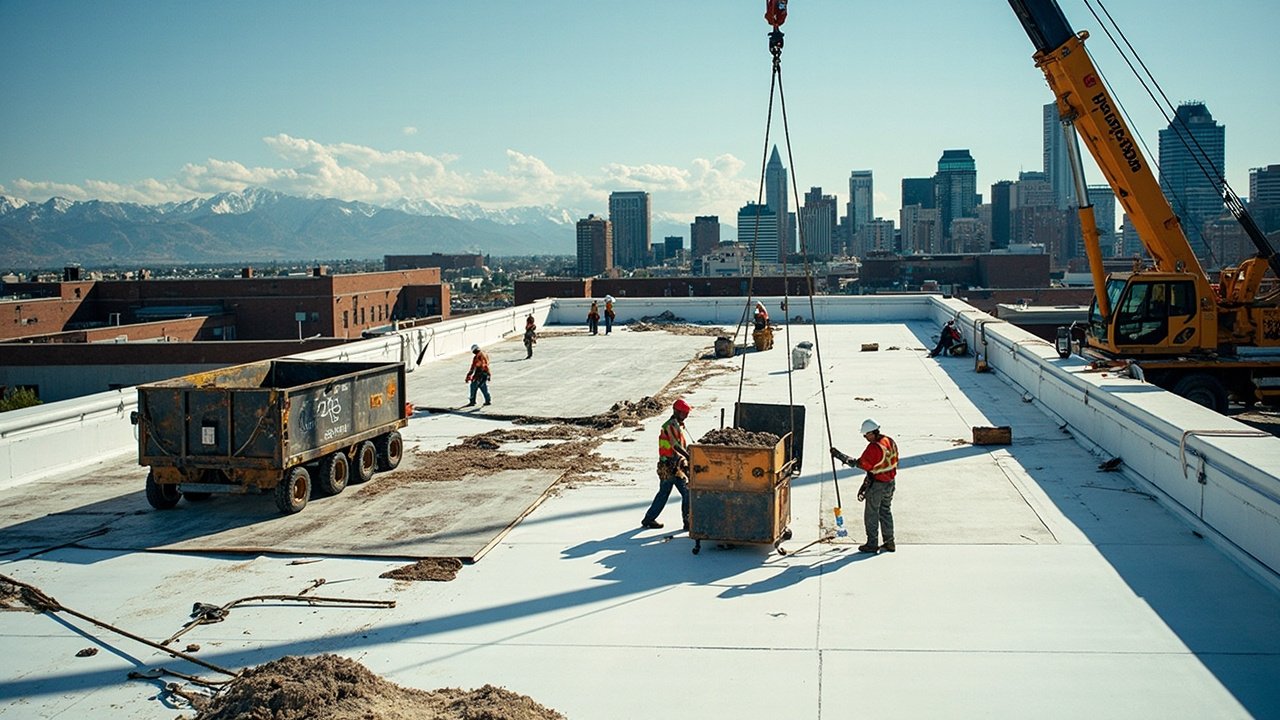
A commercial roof does much more than keep rain out of a building. It protects inventory, equipment, employees, tenants, electrical systems, and everyday business operations. In Denver, where buildings can experience snow, hail, strong sunlight, wind, and significant temperature fluctuations, maintaining a dependable roofing system is an important part of property management.
Waiting until water begins dripping from the ceiling can turn a manageable roofing issue into a much larger problem. Property owners and facility managers may detect damage early, arrange repairs more efficiently, and fortify the structure against changing weather conditions by taking a proactive approach to commercial roof repair in Denver.
Denver Weather Can Put Commercial Roofs Under Pressure
Denver’s climate can be demanding on commercial roofing materials. A roof may experience intense sunshine during one period and freezing temperatures or snow during another. These changes can cause roofing components to expand and contract repeatedly.
Over time, this movement may contribute to weakened seams, damaged flashing, loose components, cracks, or deterioration around penetrations. Hail and wind can create additional problems, particularly when a roof already has vulnerable areas.
Snow also deserves attention. As accumulated snow melts, water needs a clear path toward drains and other drainage points. Poor drainage can allow water to remain on the roof longer than intended, increasing the possibility of moisture finding its way through damaged areas.
Small Defects Can Develop Into Larger Problems
One of the biggest advantages of proactive roof repair is the opportunity to address small defects before they become expensive emergencies. A minor opening around flashing, for example, may not immediately cause visible interior damage. However, repeated exposure to rain and melting snow can allow moisture to gradually enter the roofing assembly.
The same principle applies to damaged seams, punctures, deteriorated sealants, and drainage problems. Moisture can sometimes travel beneath roofing materials before signs become noticeable inside the building.
By the time ceiling stains or dripping water appear, the affected area may extend beyond the original entry point. Earlier inspections and repairs can help reduce this risk and make roof problems easier to manage.
Routine Inspections Support Proactive Repairs
Commercial roofs should not be treated as parts of a property that require attention only after something fails. Regular inspections provide an opportunity to assess the condition of roofing materials and identify areas that may require maintenance.
Inspections can be particularly useful after significant weather events. Hail, strong winds, heavy snow, and rapid temperature changes may affect a roof even when the damage is not immediately obvious from ground level.
Professionals may examine flashing, seams, roof penetrations, drainage components, membrane surfaces, fasteners, and other vulnerable areas. The findings can then help property managers prioritize repairs according to urgency rather than reacting unexpectedly to leaks.
Protecting More Than The Roofing System
Timely commercial roof repair can protect much more than roofing materials themselves. Water intrusion can affect insulation, ceilings, walls, electrical components, merchandise, machinery, and interior finishes.
For businesses that rely on sensitive equipment or maintain valuable inventory, even a relatively small leak can interfere with normal operations. Tenants may also be affected if water reaches offices, retail spaces, or shared areas.
Preventive attention therefore contributes to broader building resilience. Keeping the roof functional helps the entire property remain better prepared for periods of severe weather.
Repairs Can Help Extend Roof Performance
Not every roofing problem means that an entire roof needs to be replaced. Depending on the roof’s age, condition, material, and extent of deterioration, targeted repairs may help maintain its performance for longer.
This is particularly important for owners managing large commercial facilities, where complete roof replacement can represent a substantial capital expense. Repairing isolated problems as they emerge can provide property managers with more control over maintenance budgets.
Keeping accurate records of inspections and completed repairs can also be useful. These records make it easier to monitor recurring trouble spots and understand how the roof’s condition is changing over time.
Planning Repairs Around Business Operations
Unexpected roofing emergencies can create scheduling difficulties for businesses. Emergency work may need to happen during operating hours, while water intrusion could require areas inside the property to be temporarily closed.
Proactive repairs provide more flexibility. When an issue is identified before it becomes urgent, property managers can coordinate work around business schedules, tenant needs, deliveries, or quieter operating periods.
This planning can be especially valuable for warehouses, offices, retail properties, manufacturing facilities, and other commercial buildings where interruptions may affect productivity or customer experience.
Building Long-Term Resilience From The Top Down
A resilient commercial property is one that is prepared to handle everyday wear as well as unexpected weather events. The roof plays a central role in that preparation.
Rather than treating roof repair solely as an emergency response, Denver property owners can incorporate inspections, maintenance, and timely repairs into their broader building management strategy. Addressing drainage concerns, deteriorated materials, damaged flashing, vulnerable seams, and other developing problems can reduce the likelihood of sudden failures.
Ultimately, proactive commercial roof care is about staying ahead of deterioration. Through regular assessment and timely repairs, Denver businesses can protect their buildings, reduce avoidable disruption, and keep their roofing systems prepared for the demanding conditions they may face throughout the year.

